
API Everywhere · 2025–2026 · Internal transformation

Making CanvaAI-ready.

An open creative toolbox connects Canva capabilities to AI.An open creative toolbox connects Canva capabilities to AI.
My role
Group design lead
Strategy, advocacy & enablement
Core collaborators
Elliott Darling · Product
Adrian Bourassa · Engineering
Gela · Design patterns & libraries
Scope
Company-wide API mindset
Public API ownership
Cross-team adoption

The challenge

APIs were seen as someone else’s work.

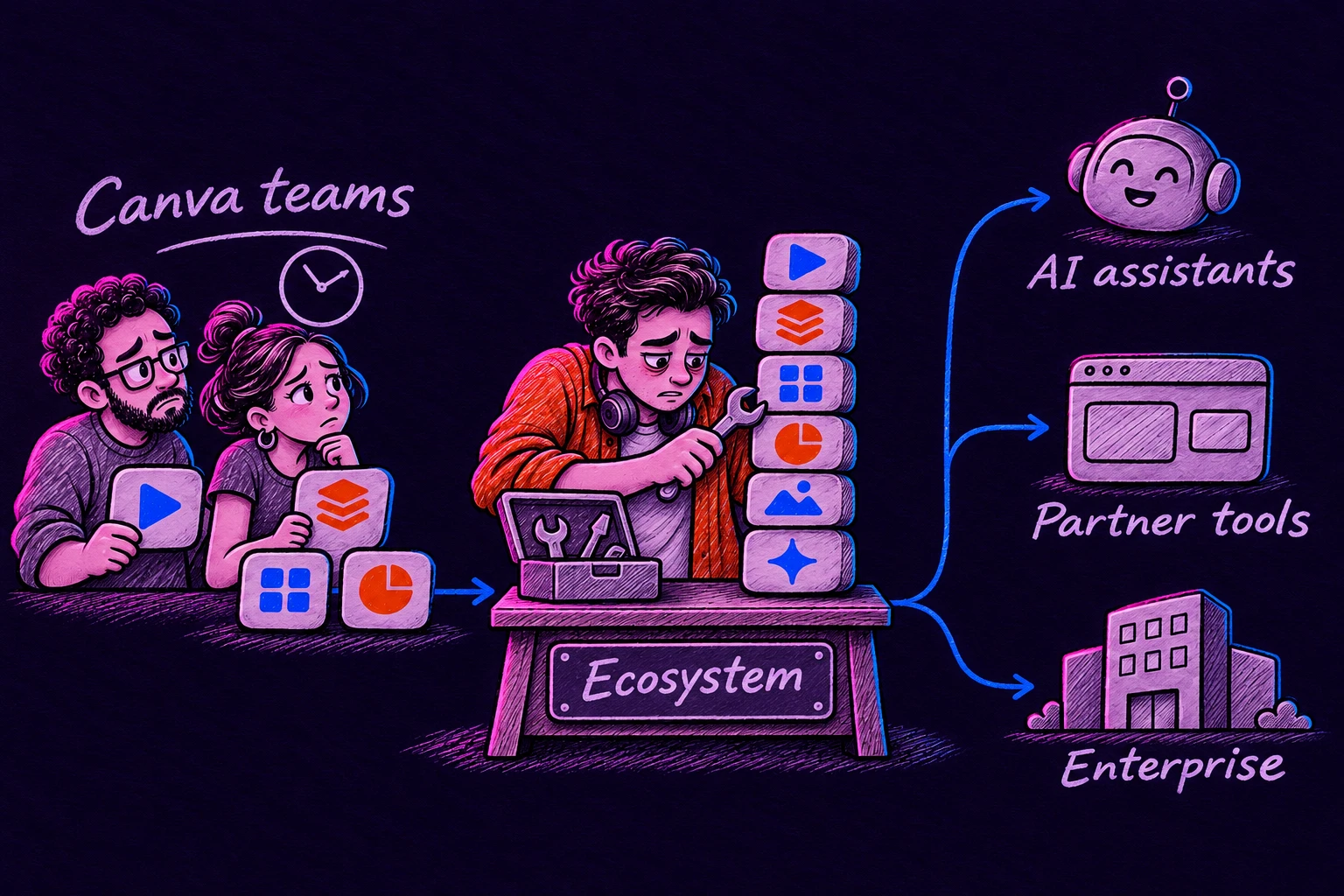
Product teams were focused on their own experiences. APIs could feel like extra work, or something Ecosystem would handle later. But routing every new connection through one group made us the bottleneck.

I helped reframe the conversation: an API lets a capability travel. The same editing, content or publishing feature can support a Canva experience, a partner workflow or an AI assistant. Building with that possibility in mind is a product decision.

Before · The bottleneck

Every connection depended on one team.

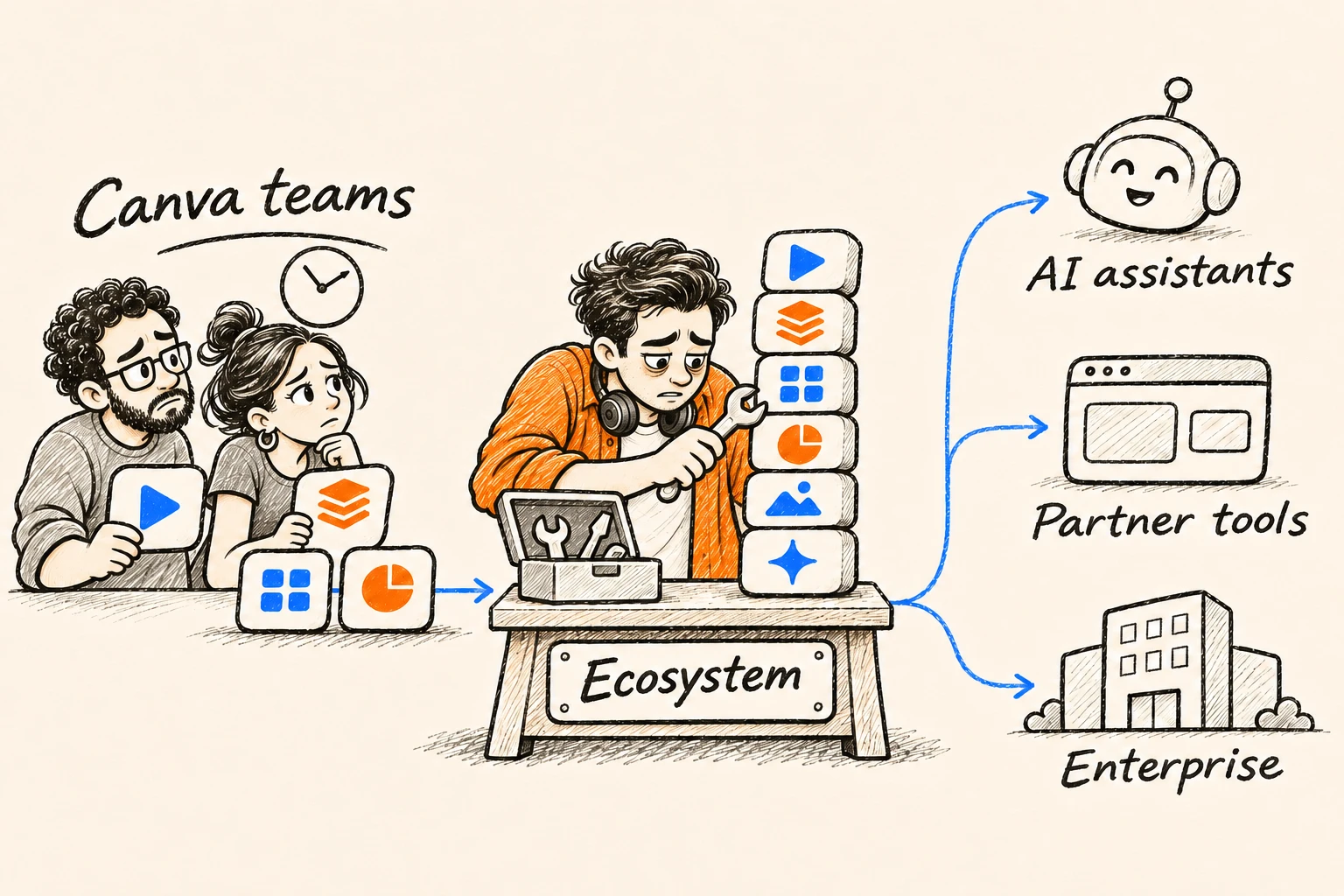
Concerned Canva colleagues wait beside a clock while an overwhelmed Ecosystem designer works through a growing stack of requests before they can reach AI assistants, partner tools and enterprise.Concerned Canva colleagues wait beside a clock while an overwhelmed Ecosystem designer works through a growing stack of requests before they can reach AI assistants, partner tools and enterprise.

Leading the shift

Make the model clear enough to act on.

With Elliott, I shaped the narrative and visualised the move to decentralised ownership: product teams build and own their APIs, while Ecosystem provides the platform, patterns and specialist support.

My remit was public APIs, connecting Canva to the world. Their foundations often depend on internal APIs owned elsewhere. I clarified that relationship, mapped capabilities and owners, and made the different routes into Canva easier to understand.

After · Shared ownership

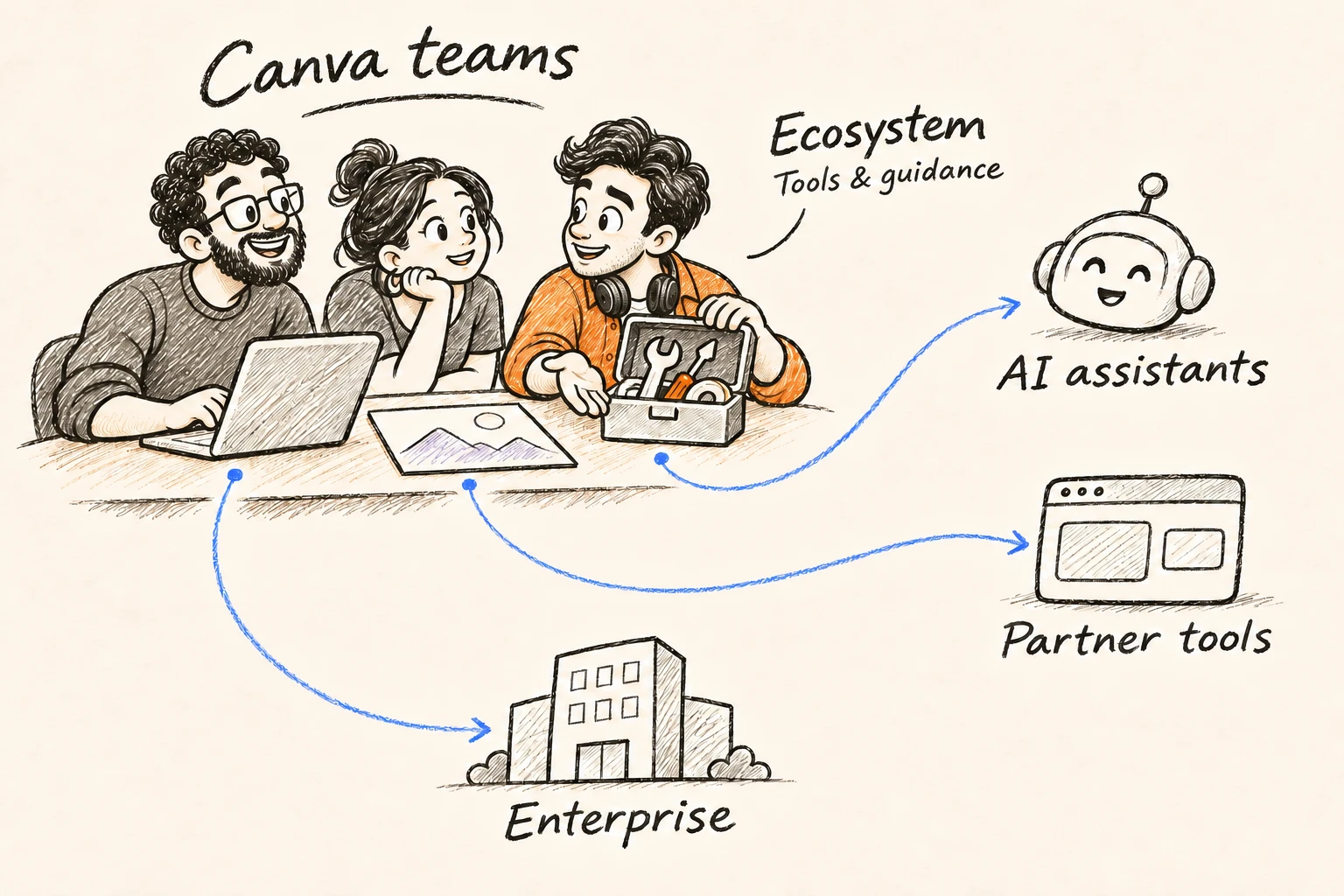
Teams build their APIs. Ecosystem enables them.

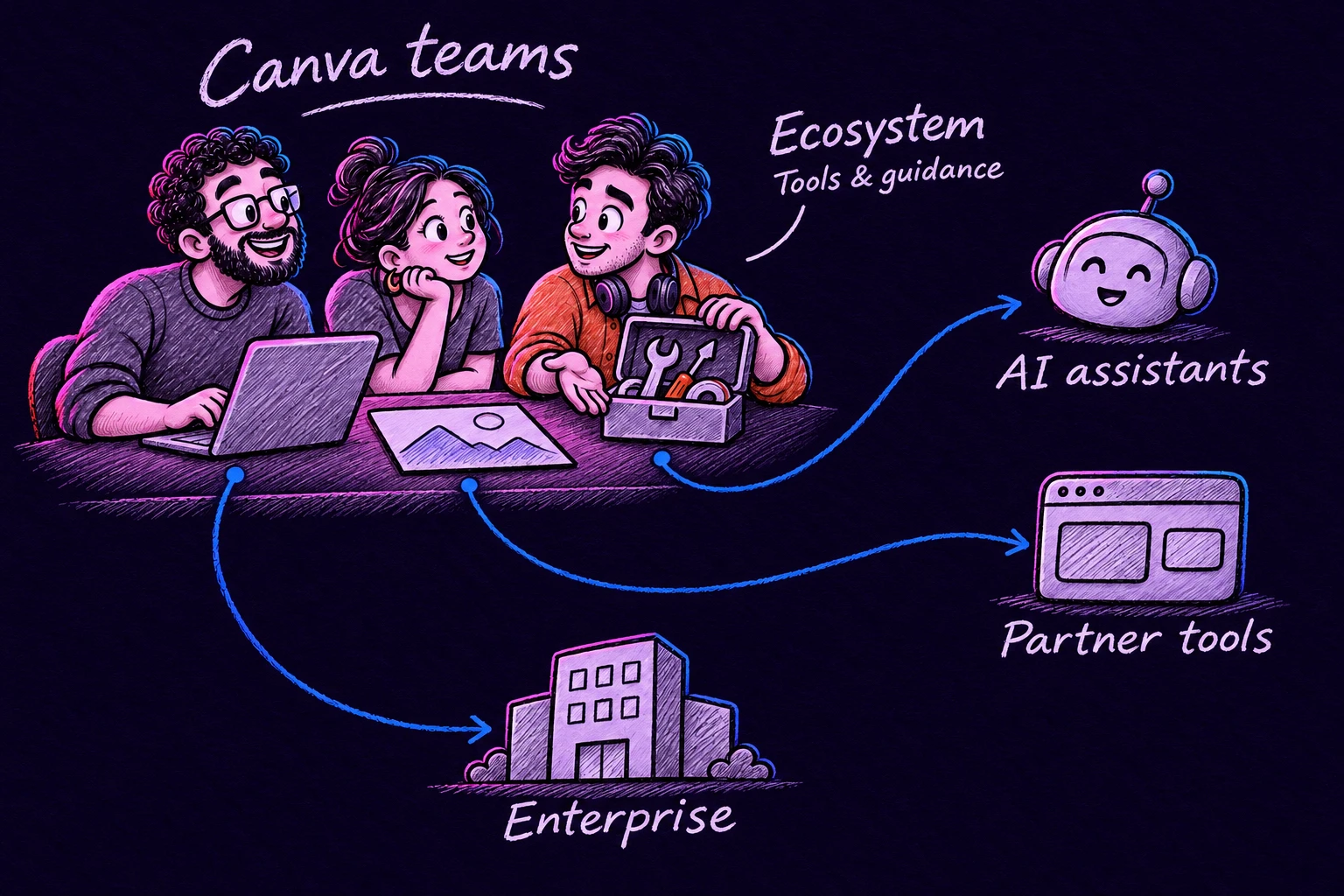
Canva teams build connections to AI assistants, partner tools and enterprise, with Ecosystem colleagues providing tools and guidance alongside them.Canva teams build connections to AI assistants, partner tools and enterprise, with Ecosystem colleagues providing tools and guidance alongside them.

Build belief through real work

Give every team a part in the story.

I convened teams across product, infrastructure, discovery, Growth, marketing and GenAI, and hosted the first Show & Tell. I brought their demos into a shared story, showing what APIs could unlock for people rather than presenting an abstract architecture.

The initiative gained founder backing and visibility in company-wide meetings and showcases. I helped communicate the engagement options across those forums, making it clear where teams could lead and where Ecosystem could support them.

From advocacy to practice

Give designers a way to start.

I co-developed lifecycle guidance with Elliott and Adrian, connecting discovery, build, launch, ongoing care and retirement. I also coached Gela on reusable Figma patterns and libraries for API and Intents experiences. The aim was to make ownership practical, with clearer documentation, responsibilities and support beyond launch day.

What changed

More teams building. More possibilities for customers.

More teams now build APIs and Intents directly, collaborating with Ecosystem through consultative and shared-ownership models. We support specific needs, from public API expertise to go-to-market, while product teams take greater responsibility for their capabilities.

That cultural shift was the central outcome of the initiative: making APIs feel like part of building a product. The initiative became a foundation for making Canva’s capabilities available to AI, opening a path to more connected experiences and less manual work for customers.

See how the Intents Platform connects those capabilities ↗